Please contact us for the best price of rubber wood FJL panels & Furniture made by Rubber wood - Email: alice.thaibinh1@gmail.com
FJL BOARDS
RUBBER WOOD FINGER JOINT BOARDS
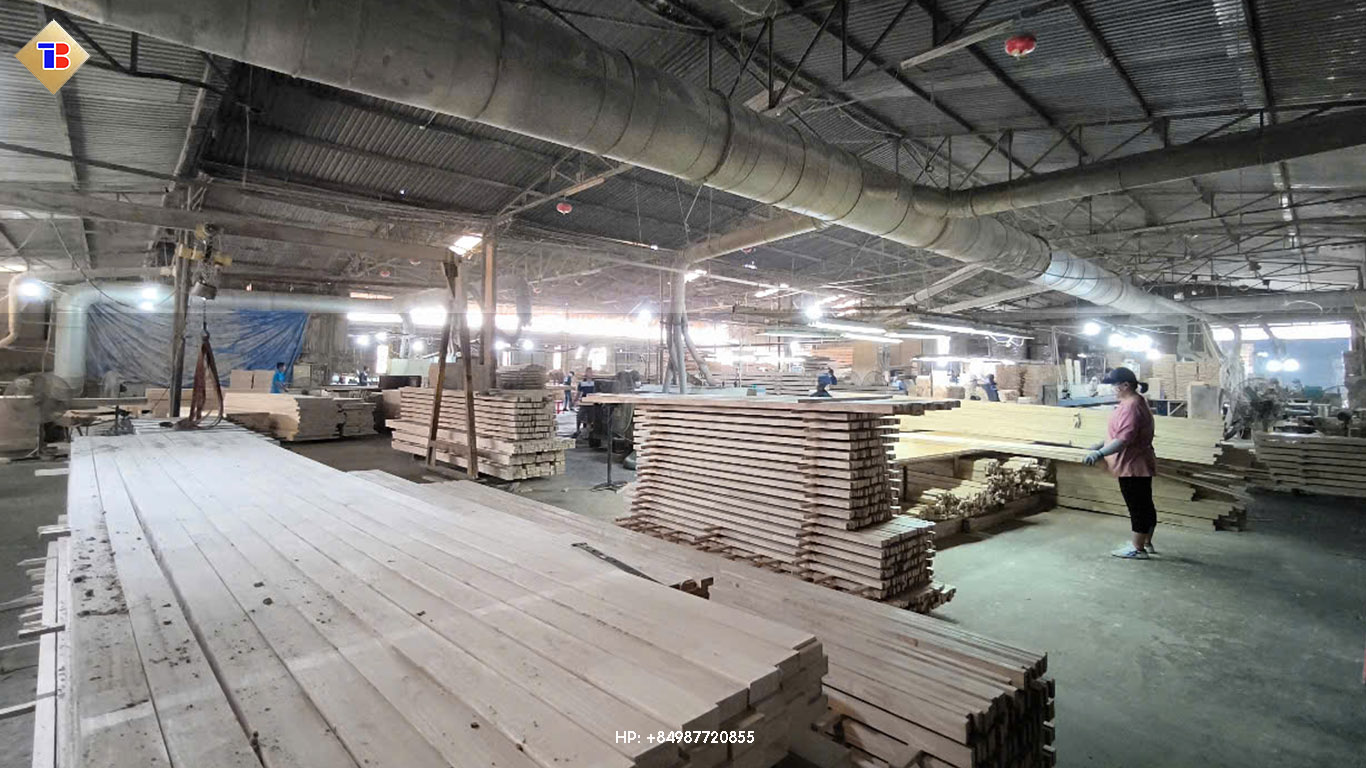
Finger Joint Board are used popularly in building and construction in many countries, especially US, Europe and Japan.
Rubberwood Finger Joint Laminating Boards:
Rubberwood finger joint laminating boards have gained immense popularity in the woodworking and furniture industries due to their durability, aesthetic appeal, and sustainable production. This guide explores everything you need to know about these versatile boards, from their features and benefits to their applications and maintenance tips. Whether you’re a professional woodworker, furniture manufacturer, or DIY enthusiast, this article will help you understand why rubberwood finger joint laminating boards are an excellent choice.
What Is Rubberwood?
Rubberwood, also known as “parawood,” comes from the Hevea brasiliensis tree, commonly grown in tropical regions for its latex production. Once the trees stop yielding latex (typically after 25-30 years), they are harvested for timber, making rubberwood a sustainable and eco-friendly option. Unlike many hardwoods, rubberwood is repurposed as part of a zero-waste process, ensuring minimal environmental impact.
What Are Finger Joint Laminating Boards?
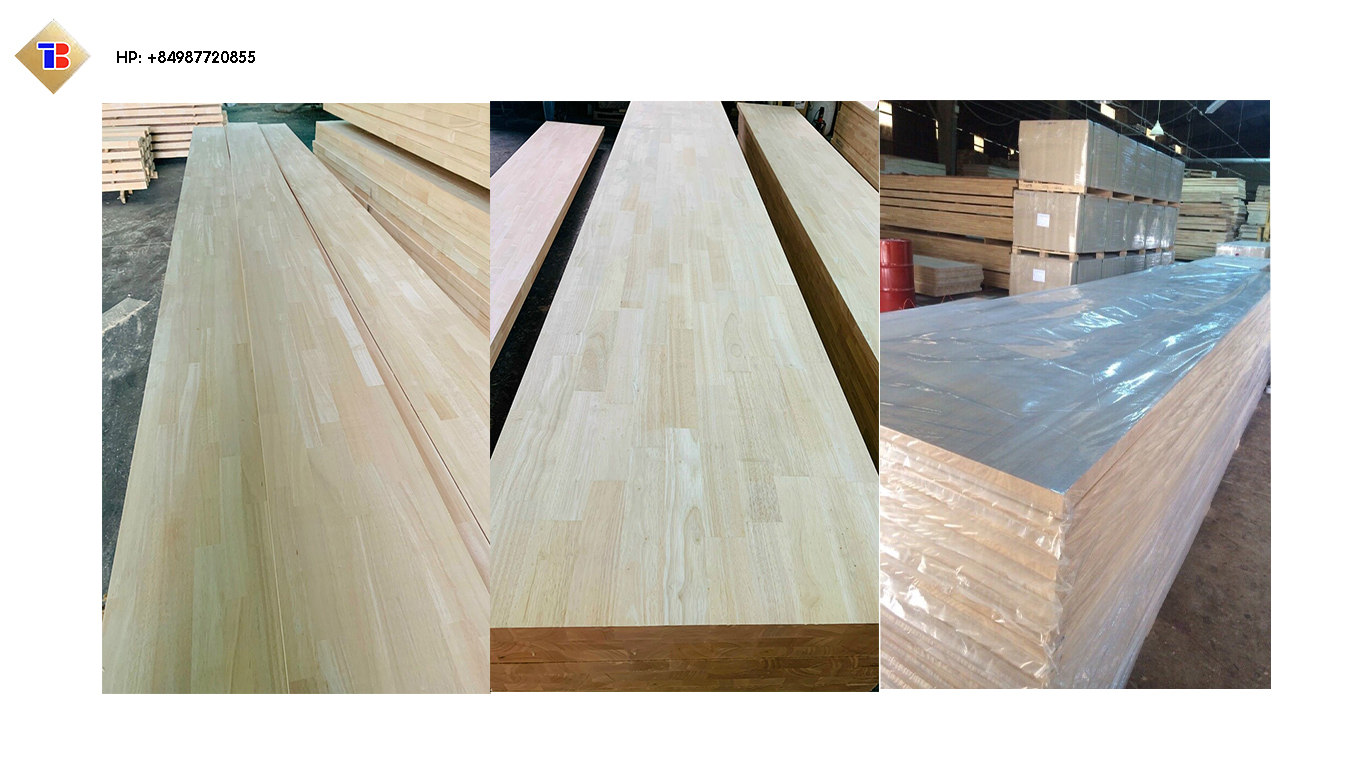
Finger joint laminating boards are engineered wood products made by joining shorter pieces of wood into longer panels using interlocking joints that resemble fingers. The joints are glued together and then laminated to create sturdy, uniform boards. This process reduces waste by utilizing smaller wood pieces and provides a visually appealing and functional product.
Benefits of Rubberwood Finger Joint Laminating Boards
- Sustainability
Rubberwood is one of the most eco-friendly options available. By utilizing wood from trees that have reached the end of their latex-producing life cycle, manufacturers reduce deforestation and promote responsible resource use. Additionally, the finger jointing process minimizes waste by combining smaller wood sections.
- Durability and Strength
The finger jointing and lamination processes enhance the structural integrity of rubberwood boards. The interlocking joints distribute stress evenly across the board, making it more resistant to warping, cracking, and splitting. This durability makes them suitable for both heavy-duty and decorative applications.
- Aesthetic Appeal
Rubberwood has a light, neutral color with a fine grain pattern, making it versatile for various finishes. The finger joints can add a unique visual texture, or they can be concealed with stains or paints for a seamless look. This adaptability makes rubberwood suitable for both modern and traditional designs.
- Cost-Effectiveness
Compared to many other hardwoods, rubberwood is more affordable without compromising quality. The efficient use of smaller wood pieces in the finger jointing process further reduces costs, making these boards a budget-friendly option for projects of all sizes.
- Ease of Workability
Rubberwood is relatively soft compared to other hardwoods, making it easy to cut, shape, and finish. Its consistent density ensures smooth machining and minimal tool wear, which is advantageous for professionals and hobbyists alike.
Applications of Rubberwood Finger Joint Laminating Boards
-
Furniture Manufacturing
Rubberwood finger joint laminating boards are widely used in furniture production. Their strength and aesthetic versatility make them ideal for:
- Tables and desks
- Chairs and stools
- Cabinets and shelves
- Bed frames
-
Interior Design and Decoration
These boards are an excellent choice for interior applications such as:
- Wall paneling
- Countertops
- Doors
- Decorative accents
-
DIY Projects
For DIY enthusiasts, rubberwood boards offer a cost-effective and easy-to-work-with material for creating custom furniture, home decor items, and crafts. Their smooth surface allows for effortless painting, staining, or varnishing.
-
Construction
In the construction industry, rubberwood finger joint laminating boards are used for non-structural applications, such as:
- Partition walls
- Ceiling panels
- Stair treads
How to Choose High-Quality Rubberwood Finger Joint Laminating Boards
- Check the Quality of Joints Ensure that the finger joints are precisely cut and securely glued. Poorly made joints can weaken the board and compromise its durability.
- Inspect for Uniformity Look for consistent grain patterns and color across the board. Uneven coloring or mismatched grains may indicate lower-quality production.
- Evaluate the Finish A smooth, even finish indicates good craftsmanship. Boards with rough surfaces or visible imperfections may require additional sanding or treatment.
- Consider Thickness and Dimensions Choose the appropriate thickness and dimensions based on your project requirements. Boards are available in various sizes to suit diverse applications.
- Ask About Certification Look for boards certified by sustainable forestry organizations, such as the Forest Stewardship Council (FSC), to ensure environmentally responsible sourcing.
Tips for Maintaining Rubberwood Finger Joint Laminating Boards
- Protect Against Moisture
Rubberwood is moderately resistant to moisture but can swell or warp if exposed to excessive humidity. Use a sealant or varnish to protect the surface, especially for applications in kitchens or bathrooms.
- Clean Regularly
Wipe the boards with a damp cloth and mild detergent to keep them clean. Avoid using abrasive cleaners that could damage the finish.
- Avoid Direct Sunlight
Prolonged exposure to direct sunlight can cause discoloration. Place furniture away from windows or use UV-protective coatings.
- Use Coasters and Pads
Protect the surface from scratches and heat by using coasters, placemats, or felt pads under heavy or sharp objects.
- Reapply Finishes as Needed
Over time, the finish may wear off. Sand the surface lightly and reapply paint, stain, or varnish to restore its original appearance.
Why Choose Rubberwood Finger Joint Laminating Boards?
Rubberwood finger joint laminating boards combine sustainability, strength, and style in one versatile package. They’re an excellent choice for eco-conscious consumers and professionals seeking high-quality, cost-effective materials. Whether you’re crafting furniture, upgrading your home’s interior, or embarking on a creative DIY project, these boards offer a dependable and attractive solution.
By investing in rubberwood finger joint laminating boards, you’re not only enhancing the aesthetic and functional appeal of your projects
Over view about THAI BINH 1 – Rubber wood finger joint boards
Our Rubber wood is main product now available, with two kinds of laminating as Finger joint & Butt joint. There are some grading qualities are suitable for using purpose in furniture and construction.
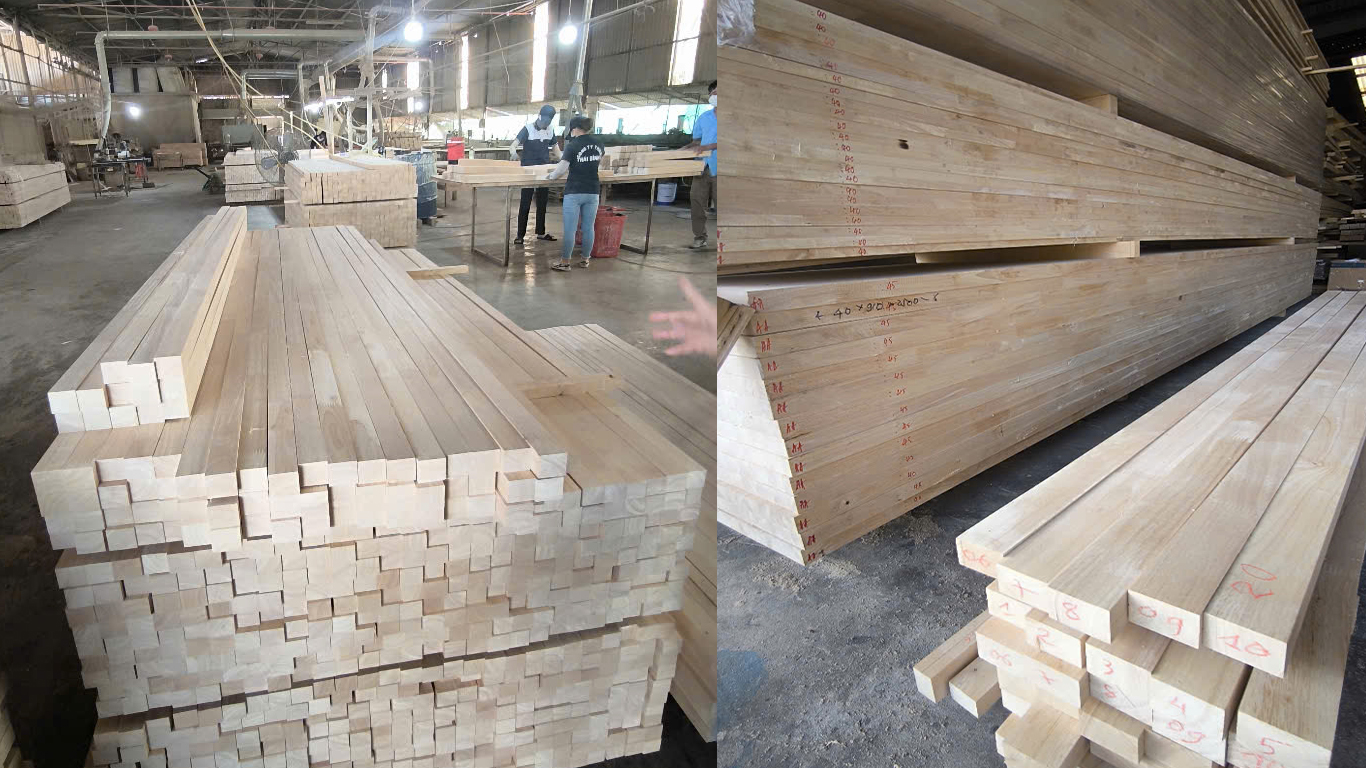
Finger joint laminated board (FJL board) is a solid wood board made by combining many laminas by finger joint or butt joint method into usable lengths strips. These strips are then pressed and laminated together by special glues (2 components adhesive) by hydraulic press machines to become the finger joint laminated board. The laminated board has many advantages that solid wood conventionally does not have. For instance, warping or twisting, which occurs in woodwork manufacturing process could be avoided if we use laminated board instead of solid wood.
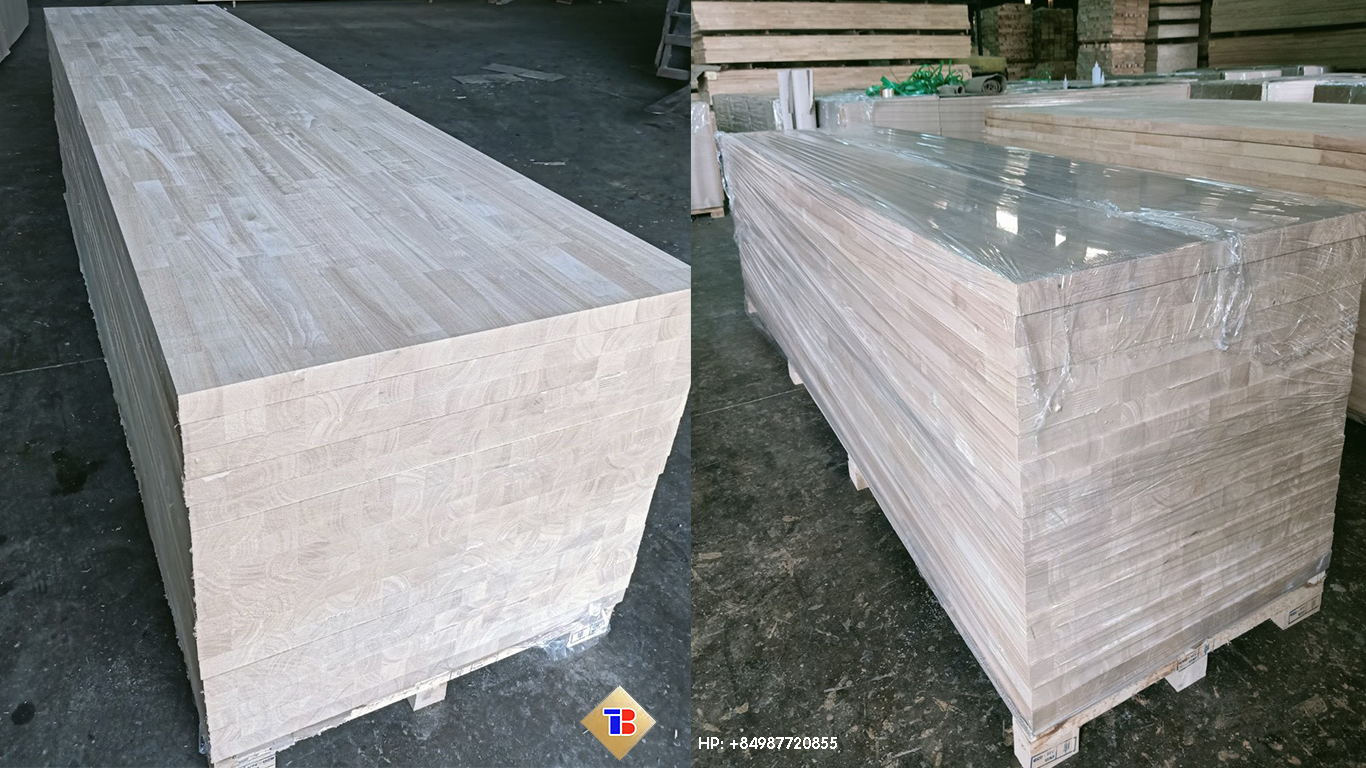
THAI BINH 1 partners with many kiln dry timber suppliers; therefore we can assure stable quality and quantity of rubber wood raw material. After air drying, the moisture of rubber wood sawn timber is around 10% (+-2%).
The length of FJL Board can be up to 5 meters and the width can be up to 1,25m. The glue (Koyobond) used for finger joint and lamination by THAI BINH 1 has F4Star certificate. The board after finger jointing and laminating has to pass all the delamination tests at THAI BINH 1. Also, we can provide customized products based on requests from customers such as uniform lamina pitch per board, cut to size or edge sanding. These customizations are usually used for DIY products.
Available in a number of thickness, width, lengths Rubber wood finger joint, full details are below:
| FINGER JOINT LAMINATED BOARD | |
| Lumber | Rubber wood |
| Types of Joint | Finger joint and Butt joint |
| Max working thickness | 15 ~ 60 mm |
| Max working width | 1250 mm |
| Max working lenghth | 5100 mm |
| Grading | AA, AB, AC, BC |
| Moisture | 8 ~ 12% |
| Pitch of lamina | Customized to orders |
| Sanding | #120 ~ #240 |
| Joining glue | D4 standard |
| ** Max lamina dimension 15 ~ 60 x 1250 x 6200 or customized to order | |
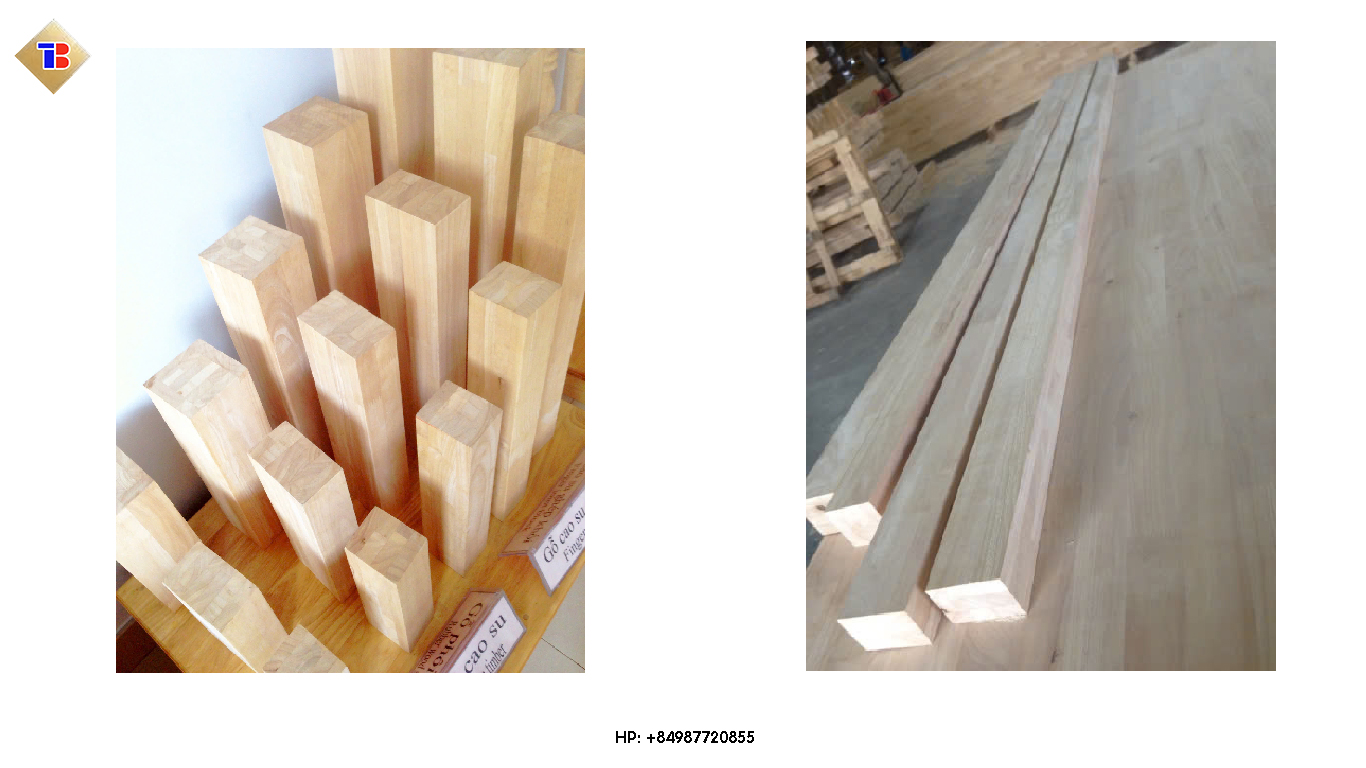
Quality control (QC) is one of our strength because we have QC procedure for the whole process of making products and one more QC step for final inspection.
Wesite liên kết www.thaibinh1.com