
Rubberwood, derived from the Hevea brasiliensis tree (commonly known as the rubber tree), is an eco-friendly and versatile material that has found its way into various industries. While primarily recognized for its use in furniture, rubberwood’s properties make it an excellent choice for household tools as well. Durable, sustainable, and aesthetically pleasing, rubberwood offers a myriad of benefits for crafting practical and functional tools for everyday use. This article explores the various applications of rubberwood in household tools, its advantages, and why it is becoming a preferred material in homes worldwide.
What Is Rubberwood?
Rubberwood is a type of hardwood harvested from rubber trees that have reached the end of their latex-producing lifecycle, typically after 25-30 years. Instead of discarding these trees, they are repurposed for their wood, making the material both cost-effective and environmentally friendly. Rubberwood’s dense grain, fine texture, and light color make it highly versatile for a range of applications, including household tools.
Why Rubberwood Is Ideal for Household Tools
- Durability and Strength Rubberwood is a hardwood with a medium density, making it sturdy yet easy to work with. Its ability to resist warping and cracking ensures that tools made from rubberwood can withstand daily wear and tear.
- Eco-Friendliness Rubberwood is a sustainable material because it utilizes trees that have already served their primary purpose of latex production. By repurposing these trees, manufacturers minimize waste and reduce the demand for cutting down other forest trees.
- Non-Toxic and Safe Rubberwood is naturally non-toxic, making it a safe material for tools that come into contact with food or are used in household environments. It is often treated with non-harmful substances to enhance its durability, ensuring it remains child- and pet-friendly.
- Aesthetic Appeal The light, creamy color of rubberwood, combined with its ability to take stains and finishes well, makes it visually appealing. Tools made from rubberwood often have a polished and elegant appearance that complements modern homes.
- Affordability Compared to other hardwoods like oak or mahogany, rubberwood is more affordable. Its cost-effectiveness allows manufacturers to produce high-quality tools at reasonable prices.
Applications of Rubberwood in Household Tools
- Kitchen Utensils
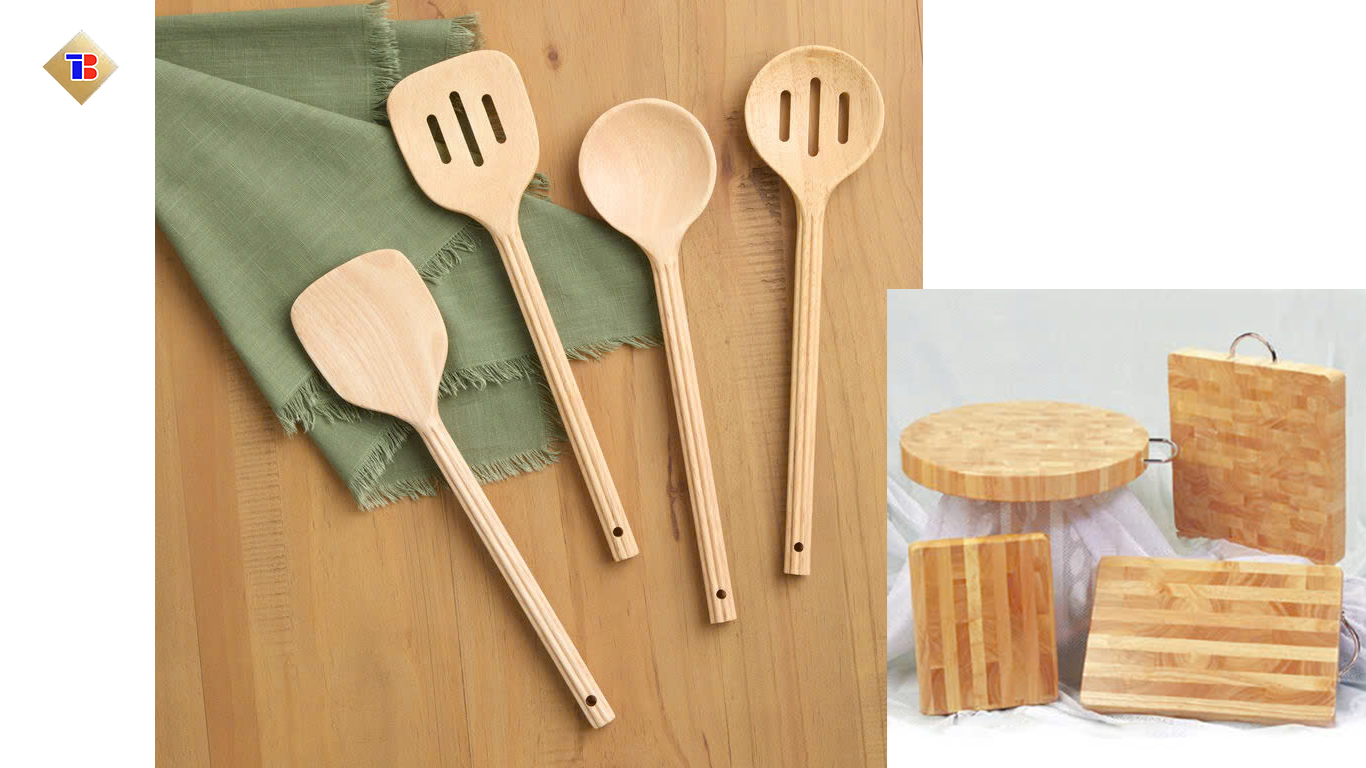
- Cutting Boards: Rubberwood’s hardness and smooth surface make it ideal for cutting boards. It is gentle on knife edges and easy to clean.
- Cooking Spoons and Spatulas: Non-reactive and heat-resistant, rubberwood is perfect for cooking tools that come into contact with food.
- Rolling Pins: The smooth texture and durability of rubberwood ensure consistent performance for baking tasks.
- Cleaning Tools
- Broom Handles: Lightweight yet strong, rubberwood is an excellent material for broom and mop handles.
- Scrubbing Brushes: The sturdy nature of rubberwood allows it to serve as a reliable base for bristle brushes used for cleaning tasks.
- Gardening Tools
- Tool Handles: Rubberwood’s strength and resistance to environmental factors make it a great choice for garden tool handles, including shovels, hoes, and rakes.
- Plant Markers: Rubberwood’s smooth surface is ideal for crafting plant markers that can be labeled with ease.
- Household Accessories
- Hangers: Rubberwood hangers are durable, lightweight, and smooth, ensuring clothes remain snag-free.
- Trays and Caddies: Rubberwood trays and caddies are not only functional but also add a touch of elegance to household organization.
- Crafting Tools
- Toolboxes: Rubberwood’s strength and ability to hold screws and nails securely make it suitable for small toolboxes.
- Workbenches: The stability and durability of rubberwood are ideal for crafting sturdy and reliable workbenches.
Benefits of Rubberwood Household Tools
- Longevity Rubberwood’s resistance to wear and tear ensures that household tools last for years, providing excellent value for money.
- Eco-Conscious Choice Choosing rubberwood tools contributes to sustainable practices by repurposing trees that would otherwise go to waste. It also helps reduce the environmental impact of using less sustainable materials like plastics.
- Low Maintenance Tools made from rubberwood are easy to maintain. Regular cleaning with mild soap and water is often sufficient to keep them in good condition.
- Versatility The ability of rubberwood to be molded, carved, and finished in various styles makes it adaptable to a wide range of tool designs and applications.
Caring for Rubberwood Household Tools
Proper care can significantly extend the life of rubberwood tools. Here are some tips:
- Avoid Prolonged Water Exposure: Rubberwood is not naturally water-resistant, so avoid soaking it in water. Wipe tools dry immediately after cleaning.
- Use Non-Toxic Finishes: Periodically treat rubberwood tools with food-safe oils or finishes to maintain their appearance and durability.
- Store Properly: Keep rubberwood tools in a dry place, away from direct sunlight or extreme humidity.
- Clean Regularly: Use a soft cloth and mild soap to clean tools, ensuring that no harsh chemicals damage the surface.
Comparing Rubberwood to Other Materials
- Rubberwood vs. Plastic
- Eco-Friendliness: Rubberwood is biodegradable and sustainable, whereas plastic contributes to environmental pollution.
- Aesthetics: Rubberwood offers a natural and elegant look, unlike plastic’s often cheap appearance.
- Rubberwood vs. Bamboo
- Strength: Rubberwood is denser and more durable than bamboo, making it better suited for heavy-duty tools.
- Sustainability: Both materials are sustainable, but rubberwood has the added benefit of repurposing latex-exhausted trees.
- Rubberwood vs. Metal
- Weight: Rubberwood is lighter than metal, making tools easier to handle.
- Safety: Rubberwood is non-reactive and safer for use in kitchens compared to some metals that may leach into food.
Popular Rubberwood Household Tool Brands
Several brands have embraced rubberwood for their household tool lines. Look for reputable manufacturers that prioritize sustainability and quality. When shopping, check for certifications like FSC (Forest Stewardship Council) to ensure responsible sourcing.
Conclusion
Rubberwood is a versatile, sustainable, and practical material for household tools. Its durability, non-toxic properties, and eco-friendliness make it a superior choice for a wide range of applications, from kitchen utensils to gardening tools. By opting for rubberwood products, you’re not only investing in high-quality, long-lasting tools but also supporting sustainable practices that benefit the environment.
In today’s world, where conscious consumerism is more important than ever, rubberwood stands out as a material that combines functionality, affordability, and environmental responsibility. Whether you’re equipping your kitchen, organizing your home, or tending to your garden, rubberwood household tools offer a reliable and stylish solution. Choose rubberwood and make a positive impact—one tool at a time.